Industries We Serve
CTai LABS delivers Edge ai integration across almost every vertical where real-world performance, thermal reliability, and on-prem data sovereignty are non-negotiable.
CTai LABS, a department of Connect Tech Inc.

Key Takeaways
- CTai LABS delivers Edge ai integration typically across the following industries, but will be available to almost all:
- Robotics and logistics
- Industrial automation
- Aerospace and defense
- Smart cities and transportation
- Healthcare
- Retail
- Autonomous vehicles
- Construction, agriculture, and mining
- Each vertical has its own sensor profile, compute requirements, environmental constraints, and certification considerations (MIL-STD, IP, SOSA).
- CTai LABS, as a department of Connect Tech, brings the hardware, BSP, cameras, software stack, and integration expertise to carry a project from architecture to a deployment-ready system in each environment, all coming from one place so there are no delays or project rescoping that could delay deployment or production.
 Built for the Real World
Edge AI That Moves Beyond the Lab
CTai LABS builds systems that process locally, without cloud dependency, on hardware built for the environment each one actually runs in, not adapted to it after the fact. That’s true whether it’s a robotics stack that must fit inside a power envelope, a factory floor system that can’t afford a dropped connection, a defense payload rated to MIL-STD-810H, or a mining fleet running unattended across a wide temperature range.

Robotics and Logistics
Global humanoid robot shipments exceeded 18,000 units in 2025, and IDC forecasts shipments will surpass 510,000 units by 2030, representing a compound annual growth rate of nearly 95 percent (IDC, 2026). CTai LABS deploys Vision-Language-Action (VLA) models on Jetson Thor-class compute so the most capable AMRs and humanoids run at the Edge without cloud dependency, using Connect Tech’s Gauntlet, Forge, and Rogue-RX platforms with NVIDIA® Jetson™ modules. Every deployment is validated through Software-in-the-Loop, Hardware-in-the-Loop, and Digital Twin testing before it reaches the field. The ai architects and engineering team also operates D.A.V.E., its own production autonomous mobile robot, so the integration problems a robotics project will hit have typically already been solved. D.A.V.E. can be seen live at shows such as XPONENTIAL, Embedded World, NVIDIA GTC, and more.

Healthcare Physical ai
CTai LABS integrates real-time sensor processing for medical imaging, surgical robotics, and patient monitoring where validated software configurations, deterministic sensor timing, and regulatory traceability are the baseline, not an add-on. The market reflects how fast this need is growing: edge computing in healthcare is projected to grow from $8.16 billion in 2025 to $23.22 billion by 2031, a 19.05 percent CAGR, driven by the need to process life-critical data in sub-millisecond windows and tightening data-residency rules that favor on-prem nodes over the cloud (Mordor Intelligence, 2026). CTai LABS runs NVIDIA Holoscan for high-frequency sensor data ingestion on Connect Tech hardware with production BSP support, built for the deterministic timing that clinical and surgical applications require.

Retail Physical ai
CTai LABS builds in-store analytics, queue management, loss prevention, and planogram compliance systems that process locally, so customer data never leaves the building. Retail is one of the fastest-growing Edge ai verticals: the Edge ai in retail market is projected to grow from $28.53 billion in 2026 to $81.71 billion by 2030, a 30.1 percent CAGR, driven by smart store deployments and demand for real-time in-store insight (The Business Research Company, 2026). That growth runs straight into the constraint that shapes every retail integration: compact, unattended hardware that delivers low-latency inference without a privacy compromise. CTai LABS designs to that constraint from day one.
Autonomous Vehicles Physical ai
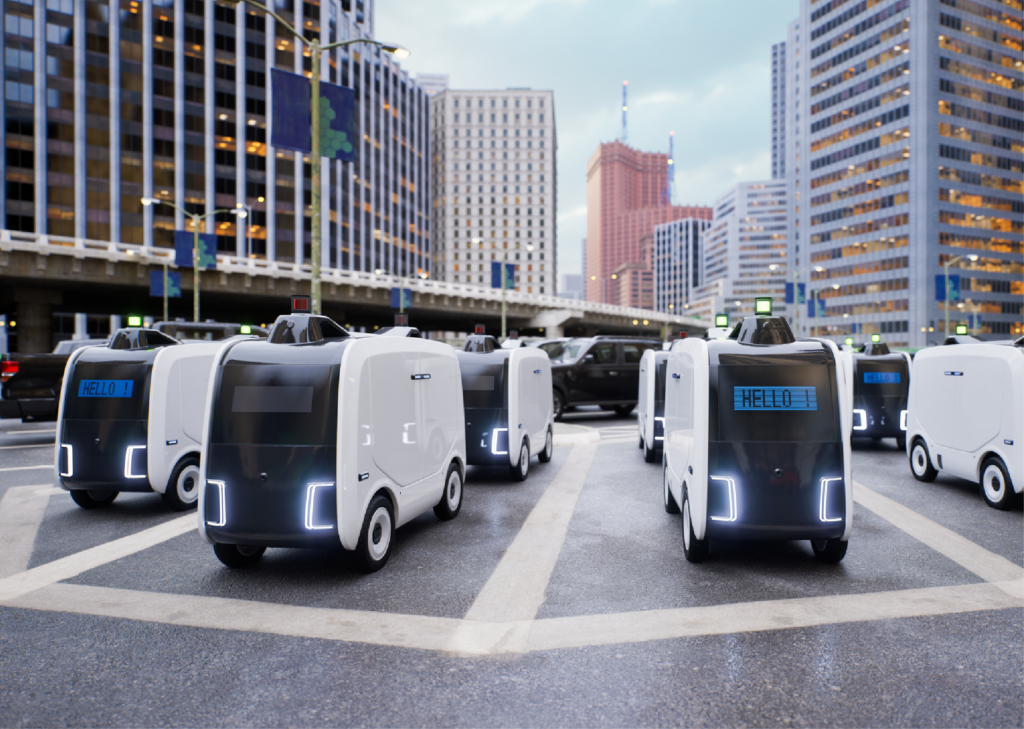
CTai LABS integrates multi-sensor fusion across cameras, LiDAR, radar, and IMUs for ADAS, autonomous mobile platforms, and vehicle intelligence systems, where every layer of the stack has to be co-designed, not assembled after the fact. Edge computing in automotive is projected to grow from $12.7 billion in 2025 to $36.97 billion by 2031, a 19.48 percent CAGR, as ADAS and autonomous driving adoption accelerates (Mordor Intelligence, 2026). High compute density, wide input voltage, camera bandwidth, and thermal performance all have to fit inside a constrained vehicle form factor, which is exactly the kind of hardware and software co-design problem CTai LABS is structured to solve from one team.
Construction, Agriculture, and Mining
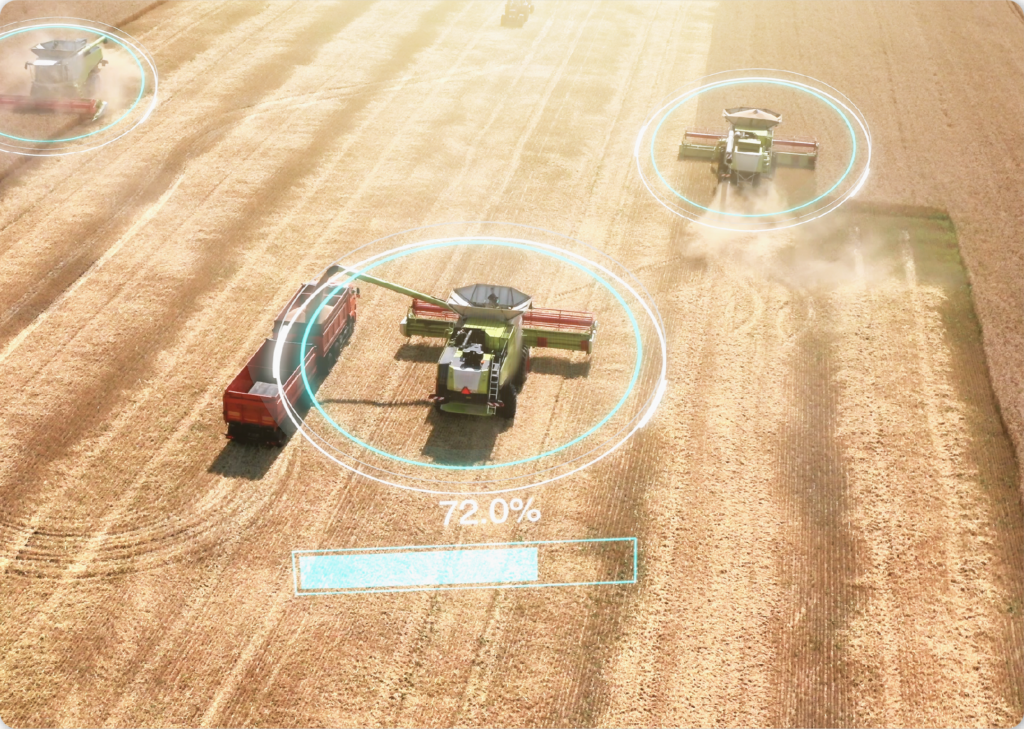
CTai LABS deploys Edge ai in rugged environments where connectivity is intermittent, dust and vibration are constants, and hardware has to run unattended for extended periods across wide temperature ranges. Both halves of this vertical are scaling fast: the ai-in-agriculture market is projected to grow from $2.43 billion in 2025 to $8.39 billion by 2031, a 21.96 percent CAGR (Mordor Intelligence, 2026), while automated mining equipment is projected to grow from $79.26 billion in 2025 to $142.3 billion by 2031, a 10.06 percent CAGR, with hardware as the leading component of that spend (Mordor Intelligence, 2026). IP67+ ingress, rugged form factors, and OTA update architecture aren’t nice-to-haves in these environments, they’re literally the operational baseline CTai LABS designs against.

Industrial Automation Physical ai
CTai LABS integrates machine vision, real-time defect detection, predictive maintenance, and Scene Analyzer Agent deployments for the factory floor, all running on-prem with no dependency on a cloud connection the line can’t afford to lose. The deployment gap in this space is well documented: around 70 percent of Industry 4.0 pilots stall before reaching production (Edge AI and Vision Alliance, 2025), typically because a proof of concept was never built to survive the thermal, timing, and integration realities of a real facility. Hardware is the constraint that determines which projects clear that bar. It led the Edge ai in industrial automation market with $4.71 billion in 2025 revenue, out of a market projected to grow from $6.14 billion to $41 billion by 2033 (Kings Research, 2026). CTai LABS builds against that reality directly: multi-camera bring-up across MIPI CSI-2 and GMSL2, -40°C to +85°C rated hardware, and RESTful API integration into existing PLC, SCADA, and MES systems. The ScrapGuard™ case study, a conveyor-speed vision system, is a working example of this approach.
Aerospace and Defense Physical ai
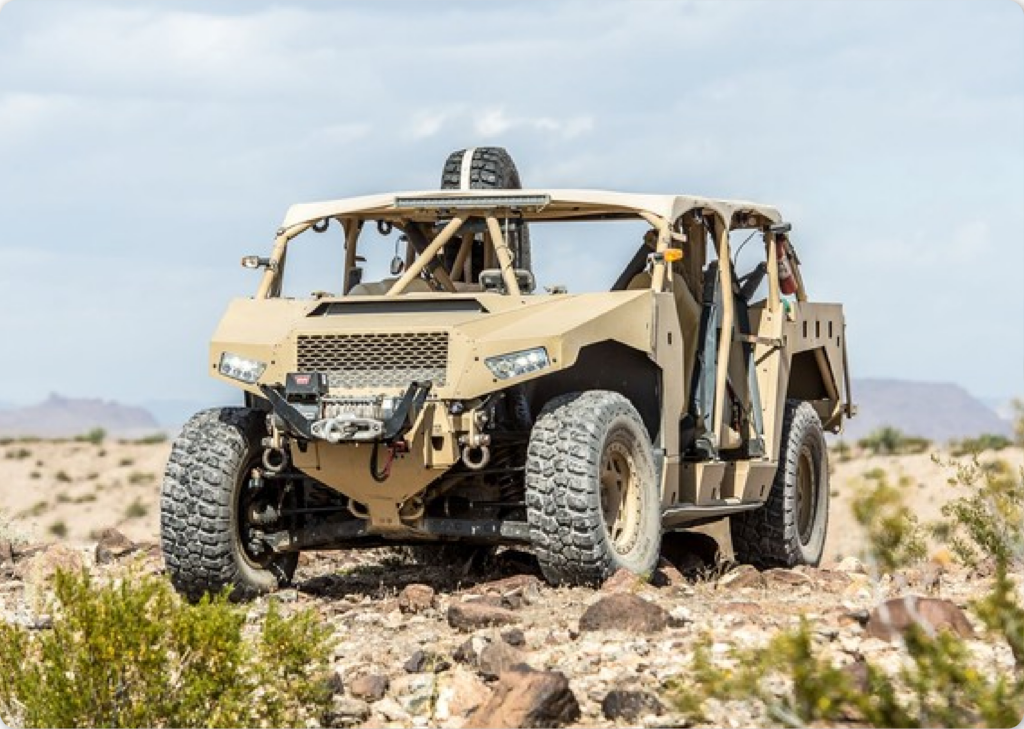
CTai LABS delivers mission-critical Edge ai for unmanned systems, ISR payloads, and vehicle-mounted compute, built to MIL-STD-810H-relevant thermal and connector standards from day one rather than hardened after a field failure. Defense investment in Edge ai is accelerating fast: the global military Edge computing market is projected to grow from roughly $3.2 to $4 billion in 2025 to $9.7 to $14.8 billion by 2033–2034 (Grand View Research, 2026; Market Intelo, 2026), driven largely by unmanned systems, with the global military UAV fleet alone projected to grow from about 35,000 units in 2025 to over 88,000 by 2032 (Market Intelo, 2026). RAND’s research on how ai could reshape modern warfare identifies quantity versus quality, hiding versus finding, and centralized versus decentralized command and control as core competitions the technology will disrupt (RAND, 2026). CTai LABS integrates against SWaP-constrained UAV payloads on Hadron and Super Hadron, vehicle-mounted and IP67-rated compute on Rogue-RX and Anvil-RX, and high-density ISR fusion on Gauntlet with Jetson Thor™, all built for communications-denied operation with no back-haul dependency.
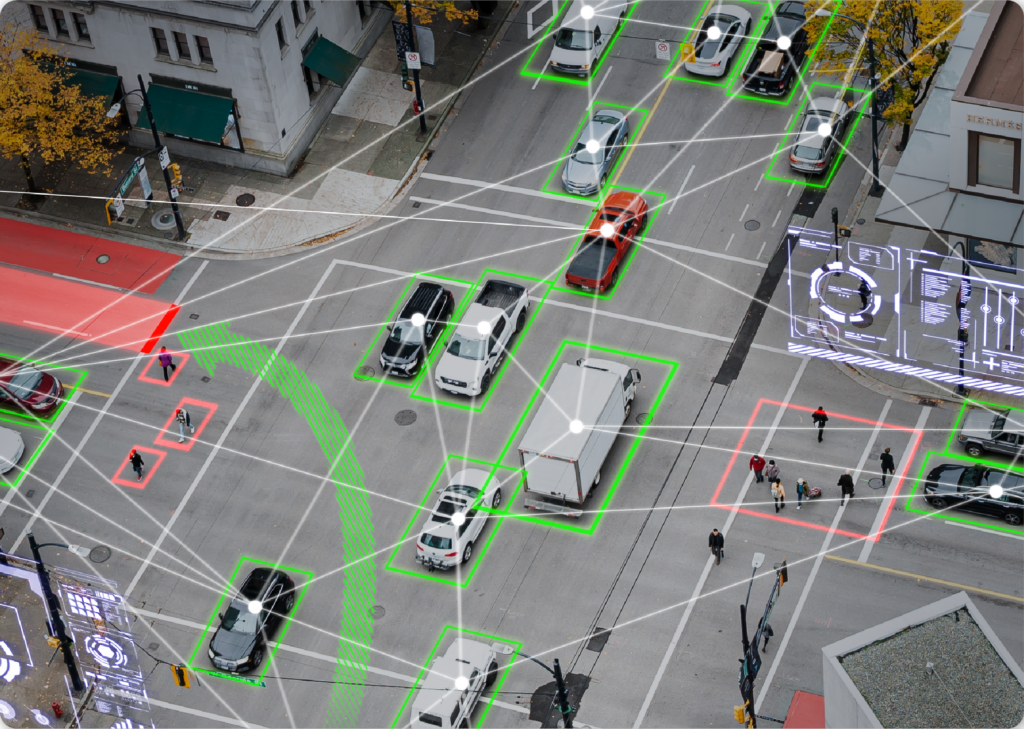
Smart Cities and Transportation Physical ai
CTai LABS builds distributed traffic analytics, pedestrian detection, and infrastructure monitoring systems that run unattended across camera-dense nodes, processing locally so a network outage doesn’t take the system down with it. This is a fast-moving space: the AI in smart city mobility market alone is projected to grow from $9.21 billion in 2026 to $20.72 billion by 2030, a 22.5 percent CAGR, driven by traffic congestion, sensor-enabled infrastructure, and rising smart city pilot investment (Research and Markets, 2026). For most public sector deployments, data sovereignty and on-prem processing aren’t preferences, they’re the requirement that determines whether a system can be procured at all. CTai LABS builds to that constraint from the architecture stage, on hardware designed for unattended, always-on operation.

Don’t see your industry? CTai LABS can support custom Physical AI applications across a wide range of environments.
 Built for the Real World
Built Around Your Deployment Requirements
Every industry has different operational, environmental, and performance demands. CTai LABS combines AI engineering, hardware integration, model optimization, sensor integration, and deployment support to create systems suited to the conditions in which they will operate.

Understand the Environment
We assess the application, operating conditions, sensors, compute requirements, and performance goal.

Design the Architecture
Our team selects and integrates the right hardware, software, models, and supporting technologies.

Optimize
for the Edge
We improve model performance, power efficiency, latency, and reliability for the target platform.

Support
Deployment
We help move the system from prototype through testing and toward production.
Learn More
Resources and Frequently Asked Questions
Also on CTai LABS
Every industry is served by the same team of ai architects and engineers, the people who select the hardware, build the integration, and optimize the model for the environment it has to run in. If you already know the service, solution, or platform you need, explore the pages below.
CTai LABS Services. The full project lifecycle under one team: architecture and consulting, ai integration, full-stack engineering, proof of concept, x86 to Jetson migration, model optimization, sensor integration, and dedicated team engagements, all built on the same in-house hardware, BSP, and software stack behind every industry deployment above.
See all CTai LABS Services →Edge ai Solutions. Capabilities CTai LABS has already built and validated on production Connect Tech hardware, so a project doesn't start from zero: ROS-Ready Launchpad, 3D Spatial Understanding, Multi-Camera 3D Reconstruction, Robot Memory and Reasoning, Scene Analyzer Agent, and the Physical ai Evaluation Kit.
See Edge ai Solutions →Built with NVIDIA. Platform-specific integration work across the NVIDIA stack: Jetson consulting, Isaac ROS development, Metropolis integration, IGX Thor consulting, TensorRT optimization, memory optimization, and Omniverse and Isaac Sim validation, the same NVIDIA Elite Partner standing behind every deployment above.
See Built with NVIDIA →Edge ai Resources. Technical guides written from CTai LABS' own integration work, not secondary research: platform decisions, memory bandwidth constraints, framework comparisons, and a production deployment checklist, for teams doing the evaluation before an engagement starts.
See Edge ai Resources →Sources
Edge AI and Vision Alliance. (2025, December 12). Why Edge ai struggles towards production: The deployment problem.
https://www.edge-ai-vision.com/2025/12/why-edge-ai-struggles-towards-production-the-deployment-problem/Grand View Research. (2025). Artificial intelligence in robotics market size, share and trends analysis report 2026 to 2033.
https://www.grandviewresearch.com/industry-analysis/artificial-intelligence-ai-robotics-market-reportGrand View Research. (2026). Military edge computing market size, share and trends analysis report 2026–2033.
https://www.grandviewresearch.com/industry-analysis/military-edge-computing-market-reportIDC. (2026, April 23). From Task Execution to Value Creation: What the 2026 Humanoid Robot Half Marathon Reveals About Industry Progress.
Kings Research. (2026, May). Edge AI in industrial automation market size and forecast 2026–2033.
https://www.kingsresearch.com/report/edge-ai-in-industrial-automation-market-3059Market Intelo. (2026). Secure edge computing for defense market research report 2034.
https://marketintelo.com/report/secure-edge-computing-for-defense-marketMarketsandMarkets. (2025). Artificial intelligence robots market report 2025–2030.
https://www.marketsandmarkets.com/Market-Reports/artificial-intelligence-robots-market-120550497.htmlMordor Intelligence. (2026). AI in agriculture market size and forecast 2026–2031.
https://www.mordorintelligence.com/industry-reports/ai-in-agriculture-marketMordor Intelligence. (2026). Automated mining equipment market size and forecast 2026–2031.
https://www.mordorintelligence.com/industry-reports/automated-mining-equipment-marketMordor Intelligence. (2026). Edge computing in automotive market size and forecast 2026–2031.
https://www.mordorintelligence.com/industry-reports/edge-computing-in-automotive-marketMordor Intelligence. (2026). Edge computing in healthcare market size and forecast 2026–2031.
https://www.mordorintelligence.com/industry-reports/edge-computing-in-healthcare-marketRAND. (2026, January 22). How artificial intelligence could reshape four essential competitions in future warfare.
https://www.rand.org/pubs/research_reports/RRA4316-1.htmlResearch and Markets. (2026). AI in smart city mobility market report 2026.
https://www.researchandmarkets.com/reports/6231460/ai-in-smart-city-mobility-market-reportThe Business Research Company. (2026). Edge artificial intelligence (AI) in retail global market report.
https://www.globenewswire.com/news-release/2026/07/02/3321399/28124/en/Explosive-Growth-in-Edge-AI-Market-From-21-84-Billion-in-2025-to-81-71-Billion-by-2030.htmlPhysical ai Industries FAQ
Does CTai LABS specialize in one industry?
CTai LABS works across almost all industries. The team and the full-stack integration approach stay the same. Hardware selection, sensor integration, and model optimization are all shaped around what the specific project needs. What can change by vertical is the sensor profile, the environmental constraints, the certification considerations, and the specific integration challenges.
How does CTai LABS handle industry-specific certification requirements?
Certification requirements (like MIL-STD-810H for defense, medical device regulations for healthcare, functional safety considerations for automotive) are scoped at the architecture stage, not addressed after the system is built. Connect Tech carriers are designed with rugged and compliance-relevant specifications, and CTai LABS builds the software stack to match. Specific certification pathways are discussed during the engagement scoping call and we can test to rigorous standards.
Can CTai LABS support deployments outside North America?
Yes. Connect Tech hardware ships globally, and CTai LABS engagements are not geographically restricted. Regional regulatory requirements (export controls for defense, regional data sovereignty rules for smart cities) are addressed during scoping. We are NDAA Compliant.
Which verticals use the most compute-intensive hardware?
Robotics, autonomous vehicles, and aerospace and defense typically require Jetson AGX Orin™ or Jetson Thor™ given the multi-model inference, high camera bandwidth, real-time sensor fusion demands, the rugged environments. Retail, smart cities, and some industrial automation applications are sometimes well served by Jetson Orin™ NX or Jetson Orin Nano in compact, cost-optimized form factors.
What if my application spans more than one vertical?
Many applications do. An autonomous logistics vehicle in a mining environment combines autonomous vehicle and construction/mining requirements. A surgical robot in a hospital combines healthcare and robotics constraints. CTai LABS scopes the integration against the actual requirements, not a single industry. The Book a Demo call is the right place to work through a cross-vertical use case.
Ready to Build Smarter?
Let’s create the intelligent Edge AI solution that moves your business forward.