About Us
Team and Engineers
The full-stack engineering organization behind CTai LABS, from ai architecture and embedded software to hardware, mechanical design, manufacturing, and field support.
CTai LABS, a department of Connect Tech Inc.
Published August 2026 | Updated August 2026

Key Takeaways
- CTai LABS is Connect Tech’s full-stack ai engineering team. A customer engagement can draw on solutions architects, ai engineers, embedded software and BSP developers, hardware and electrical engineers, mechanical and thermal engineering, manufacturing, applications engineering, and technical support
- The CTI EdgeAI Stack is more than a technology diagram. It reflects how Connect Tech and CTai LABS align compute, sensors and I/O, system software, ai models, optimization, integration, validation, and production support across one organization
- Connect Tech brings more than 40 years of embedded computing experience, in-house design and manufacturing, and NVIDIA Elite Partner depth behind CTai LABS deployments
- Keeping hardware, software, ai, mechanical, manufacturing, and customer-facing engineering close to the same project reduces handoffs and makes it easier to trace issues across the entire deployment instead of treating each symptom in isolation
- CTai LABS can join a project at architecture, proof of concept, migration, model optimization, sensor integration, production validation, or deployment support. The customer retains its product ownership and intellectual property
- Named technical leaders, including Rob Callaghan, P.Eng., and Doruk Sonmez, M.Sc., contribute public technical writing, demonstrations, interviews, and speaking engagements that make the expertise behind CTai LABS visible and verifiable
CTai LABS is often introduced through its ai architects, models, robotics demonstrations, and Edge deployment work. That is only the visible front of a larger engineering organization. Because CTai LABS is a department of Connect Tech, its ai engineering team can work directly with the people who design the compute platform, write and maintain embedded software, solve sensor and I/O problems, engineer thermal and mechanical systems, manufacture the hardware, and support customers after deployment.
Connect Tech is an in-house engineering organization spanning electrical engineering, mechanical engineering, software development, FPGA development, project management, environmental and MIL-SPEC compliance, manufacturing, and technical support. CTai LABS adds dedicated ai architecture, model, runtime, and Physical ai expertise to that base. Together, those capabilities turn the CTI EdgeAI Stack into a practical deployment model.
The expertise behind a CTai LABS engagement
A CTai LABS project does not require every discipline on every engagement. The value is that the expertise exists close enough to the project to be pulled in when the deployment demands it. The following functions represent the broader engineering depth customers can access through CTai LABS and Connect Tech.

Solutions architects and ai architects
Solutions architecture starts with the workload and the system that must ship. CTai LABS architects translate an application goal into measurable requirements across model behavior, sensor inputs, latency, throughput, memory, networking, power, thermals, software dependencies, and deployment constraints. They help determine where inference should run, which NVIDIA® Jetson™ or other Edge platform fits, how sensors and applications connect, and which parts of the stack require optimization or custom engineering.
This role is also the coordination point between disciplines. When a model problem is a data-path problem, or a compute-sizing question turns into a thermal or I/O constraint, the solutions architect can bring the relevant Connect Tech engineering team into the design before the issue becomes a late-stage rework.
Embedded software and BSP engineering
Below the ai runtime, embedded software determines whether the platform boots, exposes the required hardware, moves sensor data correctly, and remains maintainable in the field. Connect Tech software engineers develop and support board support packages, embedded Linux integration, device-tree configuration, drivers, firmware, system images, networking, boot behavior, and platform-specific software needed around Connect Tech hardware.
For CTai LABS customers, this means a deployment issue does not stop at the ai framework. Camera drivers, JetPack™ dependencies, ROS 2 integration, DeepStream pipelines, CUDA® paths, containers, update behavior, and system services can be investigated as part of the same product architecture.
ai engineering and model optimization
CTai LABS ai engineers work on the inference layer itself: model selection and migration, precision and quantization, NVIDIA TensorRT™ optimization, runtime configuration, memory behavior, preprocessing and postprocessing, multi-model pipelines, vision-language and language-model serving, retrieval, and agentic workflows. The objective is not to optimize a model in isolation. It is to make the ai workload fit the target system with enough quality, latency, throughput, memory, and operating headroom for production.
That work can include benchmarking several model or runtime paths, profiling the full application, validating One-SKU-Down opportunities, or determining when a larger compute platform is justified. The result is a measured deployment envelope rather than a recommendation based only on TOPS, model size, or a development-kit benchmark.
Hardware and electrical engineering
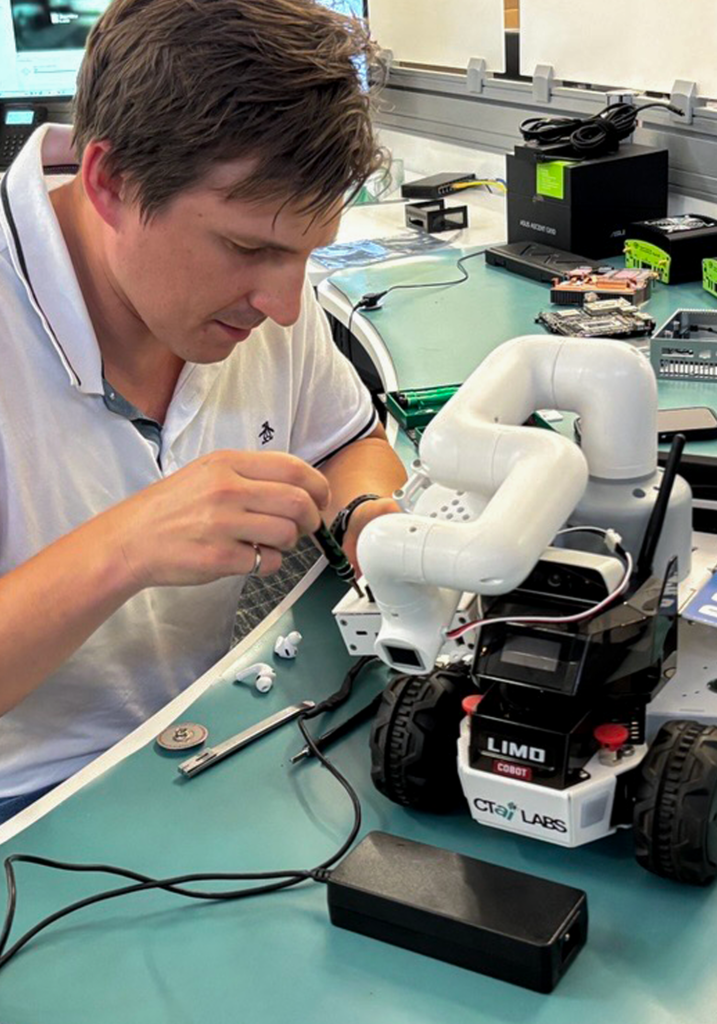
Connect Tech hardware engineers design the carrier boards, Edge systems, networking, power, and I/O foundations that many CTai LABS deployments run on. Their work spans high-speed interfaces, camera connectivity, storage, networking, power design, expansion, signal integrity, board layout, and custom embedded hardware when a commercial off-the-shelf platform does not fit the application.
That capability gives CTai LABS a direct path from software requirements to physical interfaces. If an ai workload needs additional GMSL cameras, CAN, high-speed networking, storage, synchronization, or a different power architecture, the discussion can move from application requirement to hardware feasibility without treating the compute platform as a fixed black box.
Mechanical, thermal, and enclosure engineering
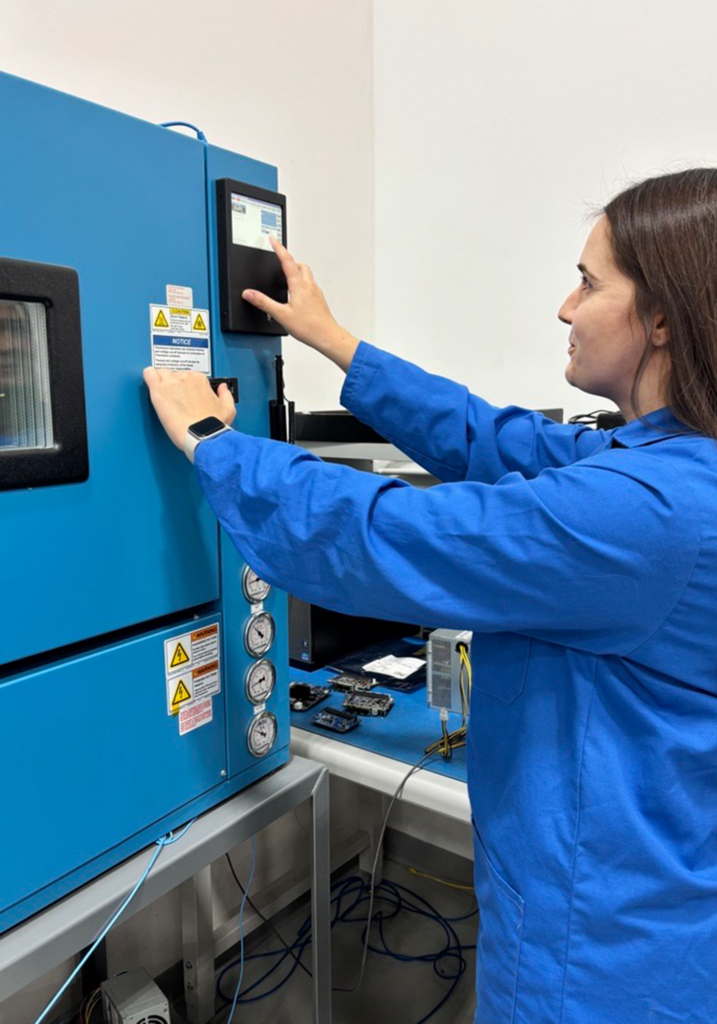
Edge ai performance must survive the enclosure and environment. Mechanical and thermal engineers address heatsinks, thermal transfer, airflow, sealed enclosures, mounting, shock and vibration considerations, connector placement, serviceability, and the physical constraints that determine whether sustained compute performance is realistic outside the lab.
This is particularly important for robotics, industrial automation, and rugged Construction, Agriculture & Mining systems, where a workload may run well on an open development kit but behave differently inside a sealed or space-constrained product. Thermal and mechanical work can therefore become part of platform right-sizing rather than a separate packaging task at the end.
FPGA, high-speed I/O, and specialized integration
Some deployments require deterministic interfaces, timing, protocol adaptation, or high-speed data movement beyond a standard processor-and-camera configuration. Connect Tech’s broader engineering organization includes FPGA development and long-standing experience with embedded I/O and networking. CTai LABS can draw on that expertise when the ai pipeline depends on specialized sensor interfaces, synchronization, custom data paths, or platform-level integration work.
Manufacturing, quality, and production engineering
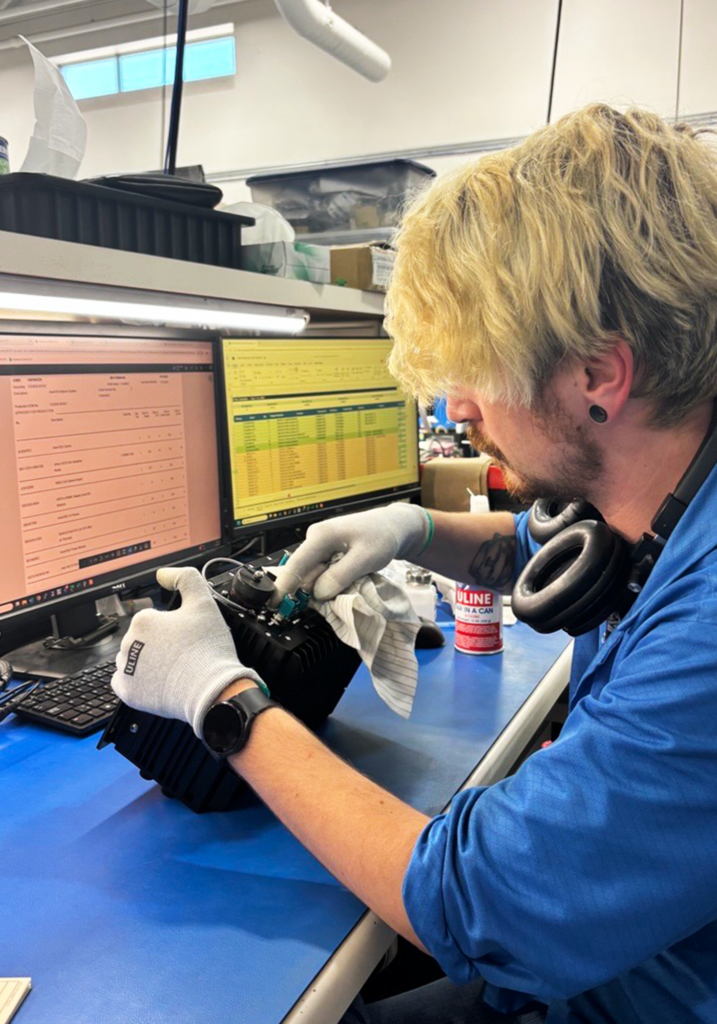
Connect Tech designs and manufactures hardware in-house, which gives CTai LABS access to the people and processes that turn a validated architecture into repeatable production hardware. Connect Tech’s published capabilities include SMT manufacturing, automated optical inspection, X-ray, selective soldering, environmental test equipment, and a design-for-certification approach backed by ISO 9001:2015 quality management.
For customers, manufacturing proximity changes the conversation from “does the prototype work?” to “can this configuration be built, tested, reproduced, and supported at the required volume?” Production feedback can reach engineering early, and hardware changes can be evaluated against manufacturability, test coverage, lifecycle, and field support before the system is locked.
Applications engineering, field support, and customer escalation
Customer-facing engineering closes the loop after architecture and development. Connect Tech’s technical support model provides direct access to engineers, with escalation into engineering when issues cross product, software, or application boundaries. Support applications engineers and field-facing technical resources help with bring-up, configuration, troubleshooting, sensor and interface questions, and deployment issues that appear only in the customer environment.
That feedback also improves future engineering decisions. Field behavior, installation challenges, software dependencies, and recurring integration problems can be fed back into product, BSP, documentation, and CTai LABS deployment work instead of remaining isolated support tickets.
How the CTI EdgeAI Stack connects the teams
The CTI EdgeAI Stack is the clearest way to understand why the broader organization matters to a CTai LABS customer. Each layer of an Edge ai deployment maps to a technical discipline, but the layers must be validated together.
| Deployment Layer | Engineering Expertise | Customer Value |
|---|---|---|
| Application and ai | Solutions architects, ai engineers, model/runtime optimization | The model, serving stack, and application are sized against real latency, quality, throughput, and concurrency targets. |
| System software | BSP, embedded Linux, drivers, ROS 2, DeepStream, CUDA, and runtime integration | Software below the model is treated as part of deployment behavior, not as an external dependency. |
| Sensors and data path | Camera and sensor integration, I/O, networking, synchronization, high-speed data movement | The perception path is designed from sensor ingress through inference and downstream application behavior. |
| Compute platform | Hardware, electrical, power, storage, carrier boards, Edge systems | Compute is selected around the whole workload and required interfaces rather than a headline specification. |
| Mechanical and thermal | Enclosure, cooling, thermal transfer, mounting, environmental constraints | Performance is validated against the physical product and sustained operating conditions. |
| Production and lifecycle | Manufacturing, quality, compliance, test, support, field escalation | The validated design has a path to repeatable build, deployment, support, and long-term ownership. |
For the customer, the benefit is not that every project becomes a custom hardware program. The all-in-house team can identify the actual limiting layer and engage the right expertise. A software-only fix is used when software is the problem. Hardware changes are considered when the interface or compute platform is the constraint. Model optimization is applied when the ai workload is the limiter. Manufacturing and support enter when the system is ready to move beyond development.
What customers gain from the structure
Fewer handoffs.

A camera, BSP, model, thermal, or power issue can be investigated across the stack without forcing the customer to coordinate several unrelated vendors.
Production-aware architecture

Hardware availability, manufacturing, lifecycle, thermals, supportability, and software maintenance can influence decisions before a proof of concept becomes difficult to change.
Parallel paths to market

Customers can start on proven Connect Tech hardware while CTai LABS optimizes the application or while a custom hardware path is developed where required.
Measured platform right-sizing

Compute, memory, bandwidth, power, sensor load, and model behavior are evaluated together, creating opportunities to reduce unnecessary cost or move One-SKU-Down when the workload supports it.
An extension of the engineering team

CTai LABS can stay engaged for the portion of the program that requires specialized Edge ai expertise without requiring the customer to hire every discipline internally.
Customer ownership

The customer retains its application, proprietary logic, product ownership, and intellectual property. CTai LABS and Connect Tech provide the engineering depth needed to move the system forward.
Technical leaders and public contributors
CTai LABS expertise is organizational, not limited to two people. Named technical leaders are still important for author authority, technical review, and public accountability. The profiles below are working drafts based on public information and should be replaced or expanded when the official internal author profiles are supplied.

CTai LABS Team
Rob Callaghan, P.Eng.
Chief Product Officer, Connect Tech Inc. | Technical reviewer, CTai LABS
Rob Callaghan leads product and engineering strategy across Connect Tech’s embedded and Edge ai portfolio and provides technical review for CTai LABS content. His background spans hardware design, embedded R&D, technical services, customer support, and product leadership.
Selected speaking and technical appearances
- ICRA 2026, Vienna: “Taking AI from a Working Edge Model to a Field-Ready System.”
- DMEMS 2024 seminar: “Artificial Intelligence: Transforming Industries and Shaping Our Future.”
- Connect Tech/NVIDIA/e-con Systems webinar : “Unveiling the Future: Empowering Next-Gen Autonomous Mobility Systems.”
- Peridio 2026 interview : Discussion on deploying Edge ai and robotics at scale, including hardware realities, field operations, and NVIDIA Jetson Thor.
- University of Waterloo RoboHub Spring Symposium 2026: Connect Tech domain expert on Edge ai hardware and robotics deployment.
Technical authority
- P.Eng., Professional Engineer.
- Long-term Connect Tech engineering and product leadership experience across full-stack hardware, embedded R&D, support, and deployment.
- Author and technical reviewer for Connect Tech and CTai LABS technical resources, including NVIDIA Jetson platform selection and Edge ai deployment topics.
CTai LABS Team
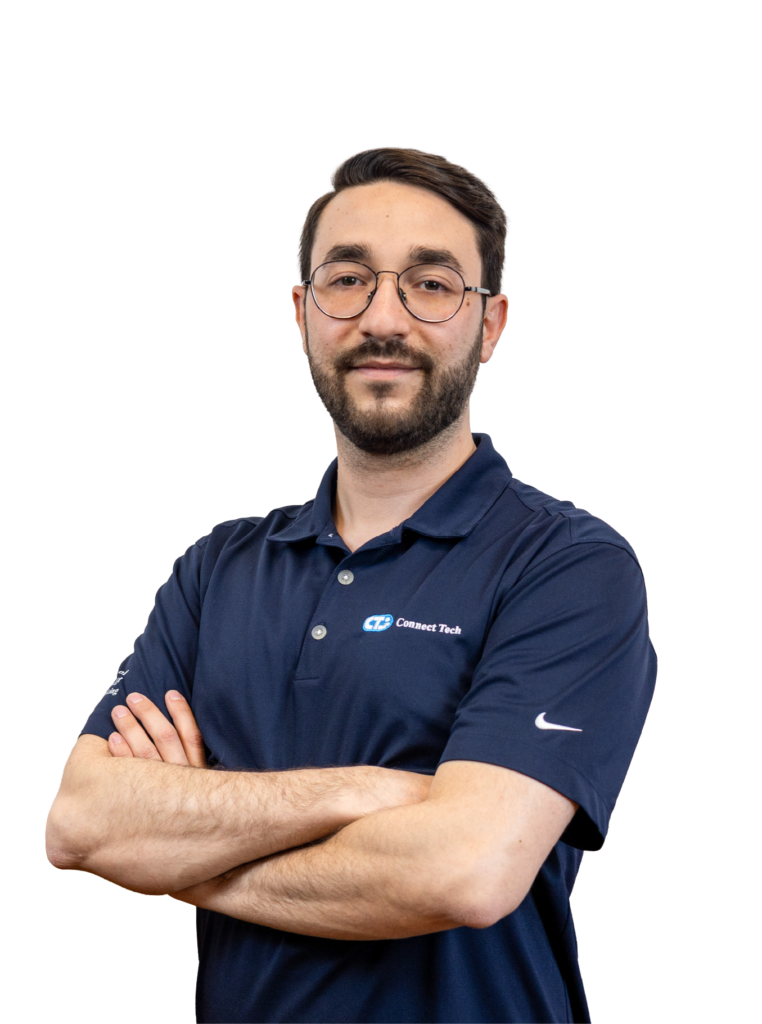
Doruk Sönmez
AI Solutions Architect, CTai LABS
Doruk Sonmez is an AI Solutions Architect at CTai LABS focused on taking ai workloads from model and prototype stages into deployable Edge systems. His extensive work spans model optimization, video analytics, NVIDIA Jetson, agentic ai, Physical ai, sensor-rich pipelines, local inference, and the system-level benchmarking required to fit modern models into embedded platforms.
At CTai LABS, Doruk has been a technical lead and public spokesperson for demonstrations that combine Connect Tech Edge hardware with NVIDIA software, simulation, and foundation models. His published CTai LABS work also documents measured optimization and migration results rather than relying on theoretical platform specifications alone.
Selected speaking, demonstrations, and technical appearances
- NVIDIA GTC 2026, San Jose: Technical lead and spokesperson for the CTai LABS live Real2Sim-Sim2Real Physical ai demonstration connecting Anvil-T5 with NVIDIA Jetson Thor, DGX Spark, Isaac Sim, Metropolis, and CTai LABS Scene Analyzer Agent.
- Presented “An End-to-End Deployment Workflow for AI Enabled Agriculture Applications at the Edge” at the 2024 International Conference for Computing and Informatics, with the paper published in the IEEE conference proceedings (Sonmez & Çetin, 2024).
- Embedded World 2022: Public technical demonstration and interview on NVIDIA Jetson AGX Orin and multi-stream Edge ai inference.
- Connect Tech Talks, 2026: Technical discussion on NVIDIA DGX Spark as a development environment and Connect Tech Edge platforms as deployment targets.
Technical authority
- M.Sc. in Computer Engineering with a Deep Learning focus, Gazi University.
- NVIDIA Deep Learning Institute Certified Instructor
- Author and technical contributor on CTai LABS Edge ai optimization, video intelligence, robotics, and Physical ai content.
The team is larger than the bylines
Rob and Doruk provide named technical authority, but most CTai LABS projects depend on in-house engineering teams. The deployment may involve a solutions architect defining the system, an ai engineer profiling the model, a software developer modifying the BSP, a hardware engineer solving an I/O constraint, a mechanical engineer validating thermal behavior, manufacturing building the platform, and applications or support engineers helping bring it up in the customer environment.
That is the larger expertise story behind CTai LABS. The ai team is not separated from the product organization that must make Edge systems work in the real world. CTai LABS can use the wider Connect Tech engineering organization when the project needs it, while remaining the customer’s focused ai engineering partner for architecture, integration, optimization, and deployment.
Build with the team behind the CTI EdgeAI Stack
Bring the idea, model, robot, vision system, sensor architecture, existing prototype, or deployment problem. CTai LABS can assemble the engineering scope around the actual constraint, from ai architecture and optimization through embedded software, hardware, thermal design, manufacturing, and production support. As Your Physical ai Integration Partner, CTai LABS works as an extension of the customer’s engineering team while the customer retains ownership of its product and IP.
 Learn More
Resources and Frequently Asked Questions
Related
About CTai LABS. Learn how CTai LABS combines ai engineering with Connect Tech’s embedded computing organization.
Explore About CTai LABS →Services. Explore CTai LABS consulting, model optimization, full-stack ai engineering, system integration, and production deployment services.
Explore Services →Built with NVIDIA. See how CTai LABS works across NVIDIA Jetson, TensorRT, Isaac, and other NVIDIA software used in Edge and Physical ai systems.
Explore Built with NVIDIA →Connect Tech Custom Design. Explore the electrical, mechanical, software, FPGA, manufacturing, and compliance capabilities behind custom embedded platforms.
Explore Connect Tech Custom Design →Sources
Connect Tech Inc. (n.d.). Capabilities.
https://connecttech.com/our-capabilities/Connect Tech Inc. (n.d.). Connect Tech Talks [YouTube playlist]. YouTube.
https://www.youtube.com/playlist?list=PLodbfg6G-y6ZMQUjk3QXYnmM0FhCNJoLqConnect Tech Inc. (n.d.). Services: End-to-end product development and compliance.
https://connecttech.com/services/Connect Tech Inc. (2026). Meet Connect Tech at ICRA 2026.
https://connecttech.com/meet-connect-tech-at-icra-2026/Connect Tech Inc. (2026, March 16). Connect Tech and CTai LABS demonstrate a deployable Physical AI workflow running live: From real-world vision analytics to Digital Twin and back.
https://connecttech.com/connect-tech-ctai-labs-demo-deployable-physical-ai-workflow/Connect Tech Inc. (2026, July 15). Connect Tech announces support for new NVIDIA Jetson T3000 and T2000 modules.
https://connecttech.com/2026-07-jetson-t3000-announcement/e-con Systems. (n.d.). Unveiling the future: Empowering next-gen autonomous mobility systems [Webinar].
https://www.e-consystems.com/webinars/unveiling-the-future-empowering-next-gen-autonomous-mobility-systems.aspElectromaker. (2022, July 1). NVIDIA’s AGX Jetson Orin is an AI powerhouse.
https://www.electromaker.io/blog/article/nvidias-agx-jetson-orin-is-an-ai-powerhousePeridio. (2026). Deploying Edge AI at scale: Interview with Rob Callaghan [Public interview/podcast].
Sonmez, D., & Çetin, A. (2024). An end-to-end deployment workflow for AI enabled agriculture applications at the Edge. 2024 6th International Conference on Computing and Informatics (ICCI), 506–511.
https://doi.org/10.1109/ICCI61671.2024.10485167WDL Systems. (2024). Artificial Intelligence: Transforming industries and shaping our future [DMEMS seminar listing].
https://www.wdlsystems.com/trade-showsReady to Build Smarter?
Let’s create the intelligent Edge AI solution that moves your business forward.