Use Cases for Edge ai
in the Real World
How CTai LABS takes ai from a concept to a deployed system, documented across real projects.
Key Takeaways
- CTai LABS is Connect Tech’s dedicated Physical AI and Agentic AI engineering capability, helping turn AI concepts into production-ready edge systems.
- It builds on Connect Tech’s embedded-computing, BSP-development, sensor-integration, and NVIDIA Jetson expertise; Connect Tech is an NVIDIA Jetson Elite Partner.
- CTai LABS supports customers worldwide across robotics, industrial automation, construction and mining, smart cities, aerospace and defense, and other edge-AI applications.
- The use cases span real-time vision for recycling safety; edge-to-cloud fleet provisioning for construction and mining; multi-camera perception for smart intersections; rugged airborne inference for aerospace and defense; multi-sensor perception for warehouse robots; and line-side defect inspection for industrial automation.
CTai LABS draws directly from Connect Tech’s proven engineering experience, including hardware, mechanical, software, BSP development, and NVIDIA platform expertise. Most of what CTai LABS builds is proprietary and covered under NDA. Customers typically keep their own IP under their full control.
Recycling Explosion Detection: ScrapGuardâ„¢
AI Solutions Architect, CTai LABS, a department of Connect Tech Inc.
NVIDIA DLI Certified Instructor
Published July 2026Â |Â Benchmark data measured on device by CTai LABSÂ |Â Technical review: Rob Callaghan, P.Eng., Chief Product Officer, ConnectTech.com
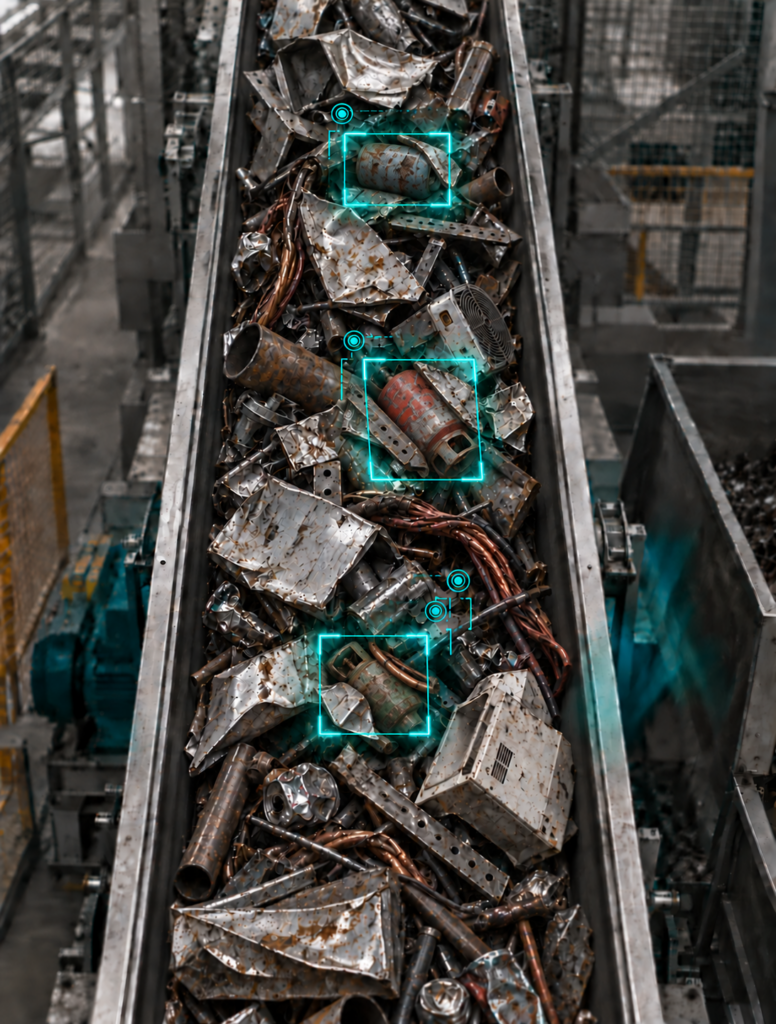
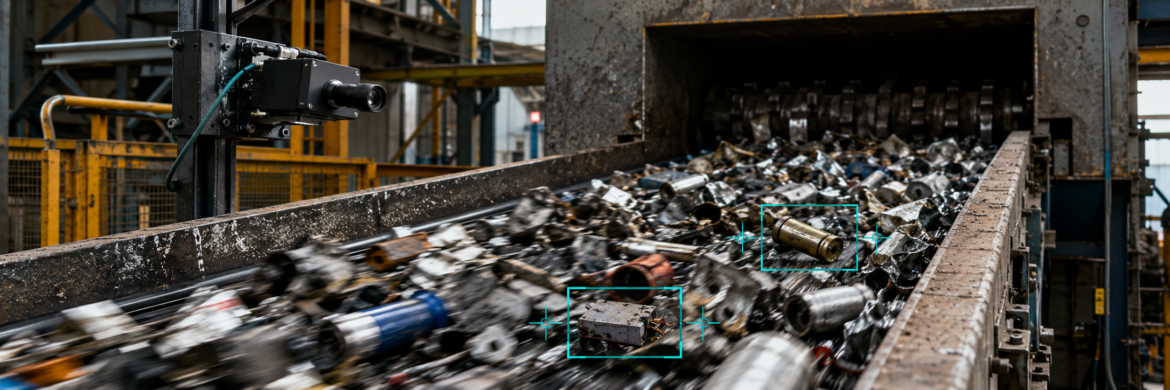
Scrap metal recycling facilities face a dangerous problem: lithium-ion batteries and pressurised canisters hidden in incoming material cause fires and explosions on the shredder line. CTai LABS worked with a recycling facility to build ScrapGuard, a real-time Edge ai vision system identifying high-risk materials on a fast-moving conveyor belt and triggers an automated response before the material reaches the shredder. That engagement is now cleared as an open framework: the detection pipeline, the hardware selected for the facility’s thermal and ingress requirements, the NVIDIA® Jetsonâ„¢ platform configuration, and the latency and accuracy targets the system was built to meet, available as a reference for other facilities to implement.
Explore Our Case Studies
Industrial AI
Vision & Perception
Recycling Explosion Detection: ScrapGuardâ„¢
Scrap metal recycling facilities face a dangerous problem: lithium-ion batteries and pressurised canisters hidden in incoming material cause fires and explosions on the shredder line. CTai LABS worked with a recycling facility to build ScrapGuard, a real-time Edge ai vision system identifying high-risk materials on a fast-moving conveyor belt and triggers an automated response before the material reaches the shredder.
Industrial AI
Edge AI
Construction & Mining: Edge-to-Cloud Provisioning: Construction OEM
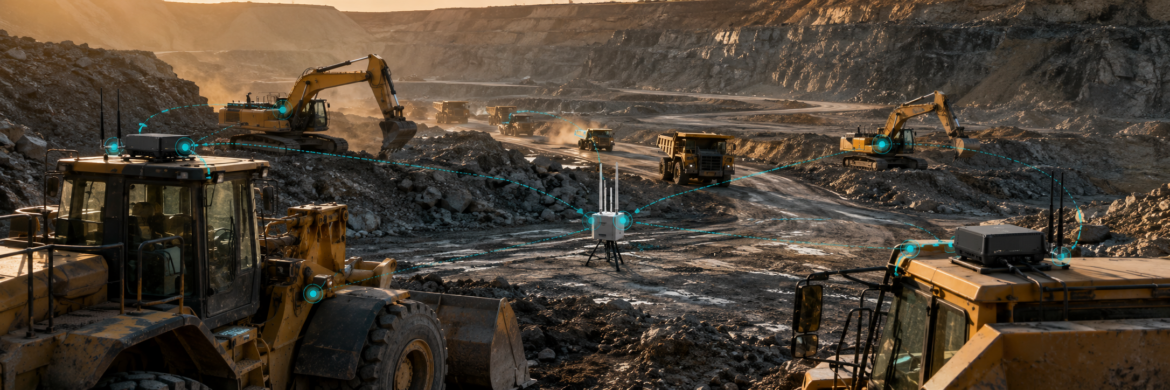
How CTai LABS built an Edge-to-cloud provisioning and management architecture for a construction and mining equipment OEM, enabling fleet-wide ai deployment and over-the-air update management across machines operating in low-connectivity environments. Full case study in production.
Vision & Perception
Edge AI
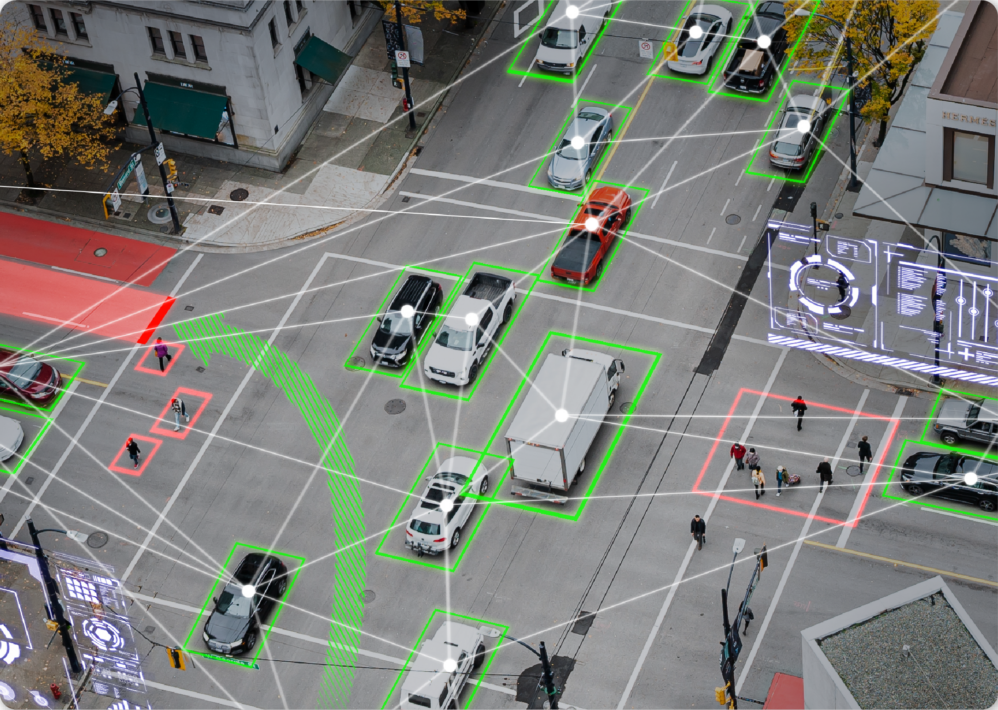
Smart City: Smart Intersection Edge Perception: Municipal Transportation
Vision & Perception
Edge AI
Aerospace, Defense, and Environmental: Rugged Edge Inference for Airborne ISR
An airborne intelligence, surveillance, and reconnaissance platform needed onboard object detection and classification running within strict size, weight, and power constraints, no cloud round trip available at altitude. The work would center on ruggedized hardware validated for vibration, thermal extremes, and MIL-STD-810H requirements, with model optimization for SWaP-limited compute.
Robotics
Edge AI
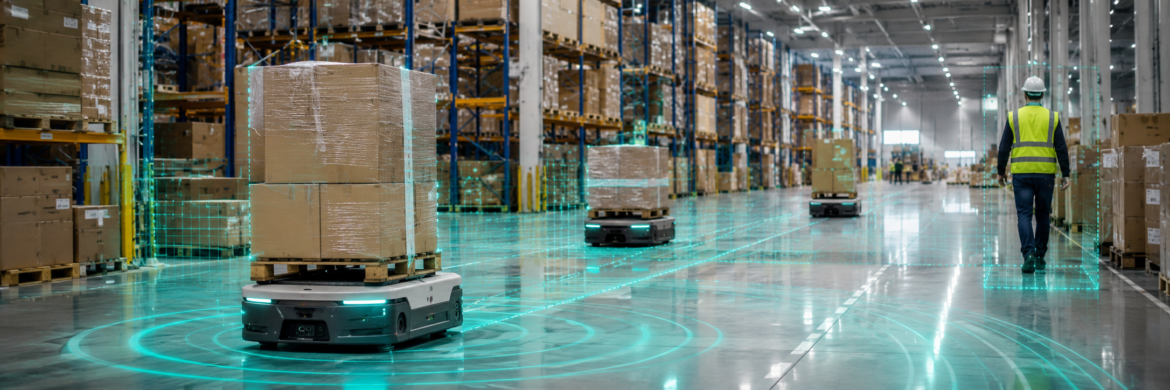
Robotics and Logistics: Warehouse AMR Fleet Perception
A fleet of autonomous mobile robots moving through a warehouse floor needs obstacle detection, pallet recognition, and path planning that accounts for live personnel nearby. Solving for that is where CTai LABS’s robotics integration work sits: multi-sensor fusion and Jetson-based Edge inference across the fleet, keeping pick-and-pack operations moving without collisions or downtime.
Industrial AI
Vision & Perception
Industrial Automation: Line-Side Defect Inspection: Manufacturing OEM
Manufacturing OEM want dimensional accuracy data on every part coming off the line, not just a pass or fail stamp, and that’s the kind of engagement CTai LABS is scoped for. The work would combine high-speed camera integration, model optimization for line-rate throughput, and a data pipeline feeding measurement trends back to the quality team so drift gets caught before it becomes scrap.
The integration methods documented in these case studies draw from the same full-stack engineering capability available across all CTai LABS engagements.
Edge ai Solutions
Pre-engineered Physical ai solutions including ROS-Ready Launchpad, 3D Spatial Understanding, Multi-Camera 3D Reconstruction, Agentic Robot Memory, Scene Analyzer Agent, and Physical ai Evaluation Kit.
Industries We Serve
Edge ai integration across robotics and logistics, industrial automation, aerospace and defense, smart cities and transportation, healthcare, retail, autonomous vehicles, and construction, agriculture, and mining, plus more.
Working on a deployment that belongs in this list?
 Talk to a CTai LABS ai Architect and engineer about your project.
Resources and Frequently Asked Questions
Frequently Asked Questions
Can I request a case study specific to my industry?
Most CTai LABS engagements are covered by NDA and the IP stays with the customer, so the published list is what we have permission to share. If you are evaluating CTai LABS for a project and want to discuss work in your vertical, the Book a Demo call is the right place.
How technically detailed are the case studies?
Published case studies cover the problem, the hardware selection rationale, the NVIDIA software stack configuration, the integration decisions, and the outcome against the production success metric.
How does CTai LABS turn an application story like these into a real deployment?
Each story here represents a problem CTai LABS has the technical depth to solve, not a promise about scope or price. Turning it into a real deployment starts with a discovery call to pin down your specific constraints, then moves through hardware selection, model work, and validation before anything ships. The application stories are a starting point for that conversation, not a menu.
What's different about CTai LABS's approach versus a typical systems integrator?
Most integrators source hardware from a catalog and build software around whatever they get. CTai LABS is a department of Connect Tech, so the hardware, the BSP, and the thermal design come from the same team doing the ai integration. That ownership means fewer handoffs, fewer surprises, and customization when something needs to change mid-project.
Does CTai LABS just advise, or does the team actually build and deploy?
Build and deploy. CTai LABS runs full-stack engagements: architecture, hardware selection, model optimization, and a deployment-ready handoff, not a slide deck with recommendations. Advisory-only work happens occasionally, but the default engagement model ends with a working system.
Why build on Connect Tech hardware instead of sourcing separately?
Because CTai LABS is a department of Connect Tech, the team isn’t integrating onto someone else’s board and hoping the documentation holds up. They’re working with the people who designed the thermal profile and wrote the BSP, which cuts out the back-and-forth that normally happens when a hardware issue surfaces mid-project.
Do you need a finished model to start or can CTai LABS build one?
Either. Some projects arrive with a trained model that needs to run faster on the target hardware, which is a NVIDIA® TensorRT™ optimization and quantization job. Others start from raw sensor data and nothing else, in which case the model gets built alongside the NVIDIA® Isaac™ ROS integration work rather than handed off separately.