Built with NVIDIA
NVIDIA® Jetson™ Physical ai consulting, integration, and optimization services from CTai LABS, a department of Connect Tech, an NVIDIA Elite Partner.
CTai LABS, a department of Connect Tech Inc.

Key Takeaways
- CTai LABS delivers end-to-end Physical ai consulting and integration services
- CTai LABS draws on Connect Tech’s NVIDIA® Elite Partner status
- One team owns the hardware, board support package (BSP), and software stack, which is what separates CTai LABS from a software-only consulting firm
-
Covers the full NVIDIA platform stack integrations from concept to
deployment, examples:
- Jetson Orin™ and Jetson Thor™ hardware consulting
- Isaac™ ROS development
- Metropolis integration for smart infrastructure and industrial vision
- IGX Thor consulting for high-compute robotics and autonomy applications
- TensorRT™ model optimization
- Omniverse and Isaac Sim for Digital Twin and simulation workflows
- BSPs written in-house
 NVIDIA Technology, Integrated by Connect Tech
Jetson Orin or Jetson Thor: the platform decision
CTai LABS is a one-stop shop for NVIDIA® Jetson™ integration: hardware selection, board bring-up, sensor integration, model optimization, and validation, under one team instead of stitched together across separate vendors. That starts with the question every engagement opens on, which module fits the workload, and CTai LABS answers it against compute, power envelope, camera I/O, and application type before a board is ever ordered. The two-panel overview below covers the primary choice for most deployments.
NVIDIA JETSON PLATFORM
Jetson Orin™ Family
Up to 275
Tops
16-60 W
POWER
- Jetson Orin NX: 67–157 TOPS
- Jetson Orin Nano: up to 67 TOPS
Application
Industrial vision, logistics AMRs, defense payloads, compact deployments
NVIDIA JETSON PLATFORM
NVIDIA Jetson Thor™ (T5000)
2,070
FP4 TFLOPS
40–130 W
POWER
- 7.5× AI compute vs Jetson AGX Orin
- Blackwell™ GPU
Application
Humanoids, advanced AMRs, VLA models, multi-sensor ISR
Source: NVIDIA, 2025 (Jetson AGX
Orin and Jetson Thor product specifications).
The Jetson Orin vs. Jetson Thor guide covers the full decision framework: TOPS figures, memory bandwidth, and camera bus comparison.
 NVIDIA Services
NVIDIA Platform Services
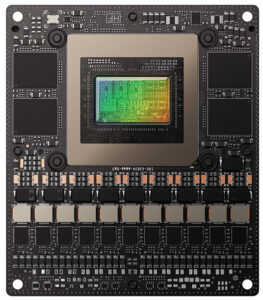
NVIDIA Jetson Consulting
Most Jetson engagements start in the wrong place: picking a module off a spec sheet before the workload, sensor load, and power envelope are defined. CTai LABS runs this the other way. Platform selection happens as the first stage of the standard six-stage engagement, workload and sensor assessment before hardware and architecture selection, because the right module (Jetson Orin Nano, Jetson Orin NX, Jetson AGX Orin, or Jetson Thor) only becomes obvious once the compute, camera I/O, and thermal constraints are on the table. That decision doesn’t stop at the chip: since Connect Tech designs the hardware the module runs on, CTai LABS is also matching the project to the right hardware (Forge, Gauntlet, Rogue-RX, Hadron, Boson, or Lepton) in the same pass (Connect Tech, 2025, 2026), not treating hardware and board selection as two separate vendors’ problems. That’s the practical benefit of going through CTai LABS instead of a software-only consultancy: one architecture review produces a module decision and a board decision that are already compatible, backed by Connect Tech’s decade-plus of hardware design and BSP development across every Jetson generation.
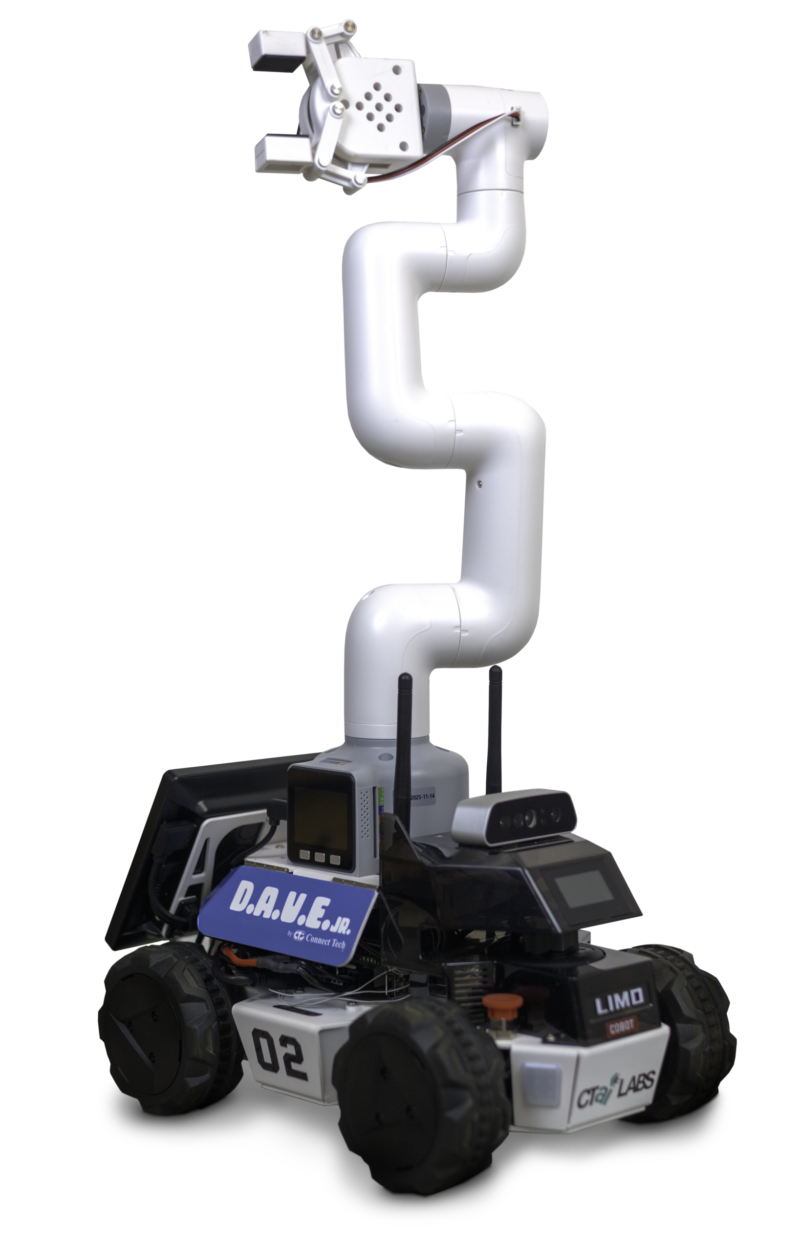
NVIDIA Isaac ROS Development
ROS 2 has a real bring-up cost on embedded hardware: distributed-systems performance trade-offs, ambiguous multi-camera stream handling, and a DDS configuration that most teams get wrong the first time. CTai LABS compresses that cost with the ROS-Ready Launchpad, a validated Isaac™ ROS environment configured against the specific solution and thermal solution, with the production BSP already in place, not a development kit bring-up starting from zero. Isaac ROS is configured against the real hardware stack, not a generic dev kit, which is what makes the integration production-ready rather than a prototype. That’s the difference between Isaac ROS configured by a team with BSP-level access to the Edge ai solution versus a team working from someone else’s hardware: sensor timing issues that trace back to the board design are actually fixable, not just diagnosable.
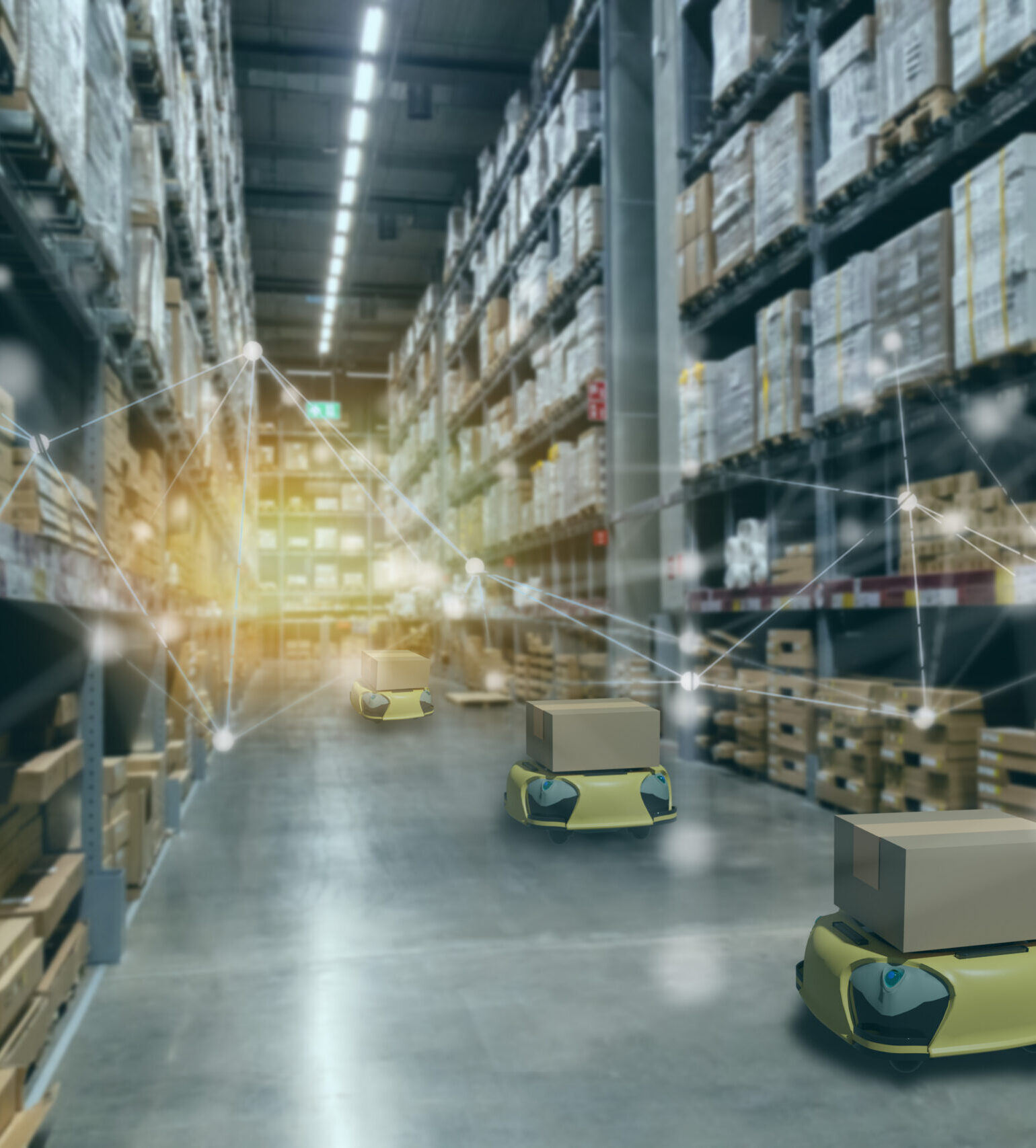
NVIDIA Metropolis Integration
Metropolis handles the video analytics microservices layer, but a production deployment needs more than the SDK: synchronized multi-camera bring-up across MIPI CSI-2 or GMSL2, inference that holds at production line speed, and a way to get structured output into whatever system is already running the facility. CTai LABS builds that full path. The Scene Analyzer Agent, one of CTai LABS’ pre-engineered solutions, is a working example: real-time scene understanding and anomaly detection running on-prem on Connect Tech Edge hardware, with a RESTful API layer connecting the output into existing PLC, SCADA, or MES infrastructure, no cloud dependency in the loop. That’s the integration work that determines whether a Metropolis-based system actually reaches production: camera pipeline bring-up, model deployment at the target frame rate, and a protocol adaptation layer that speaks the customer’s existing systems, not just the demo environment.
NVIDIA IGX Thor Consulting
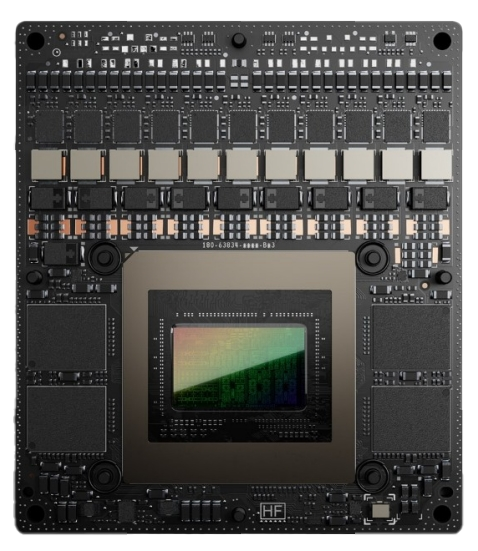
Jetson Thor is the platform for workloads that Jetson AGX Orin can’t carry: vision-language-action models, multi-model autonomy stacks, and dense multi-sensor ISR fusion, all of which need the 2,070 FP4 TFLOPS and Blackwell™ GPU architecture Jetson Thor delivers at 40 to 130 watts (NVIDIA, 2025). CTai LABS has already put that compute to work: 3D Spatial Understanding and Agentic Robot Memory, two of CTai LABS’ pre-engineered solutions, are deployed on Jetson Thor today, giving teams working with foundation models at the Edge a validated starting point instead of a greenfield integration. On the hardware side, that could meanSom full-stack integration on the Connect Tech Gauntlet or Rogue-T5 (AGX302) carriers, matched to the camera bandwidth (16-lane MIPI CSI-2, GMSL3/2/1, FPD-Link III) that humanoid and advanced AMR platforms actually need to feed a Jetson Thor-class pipeline (Connect Tech, 2026).
TensorRT Optimization
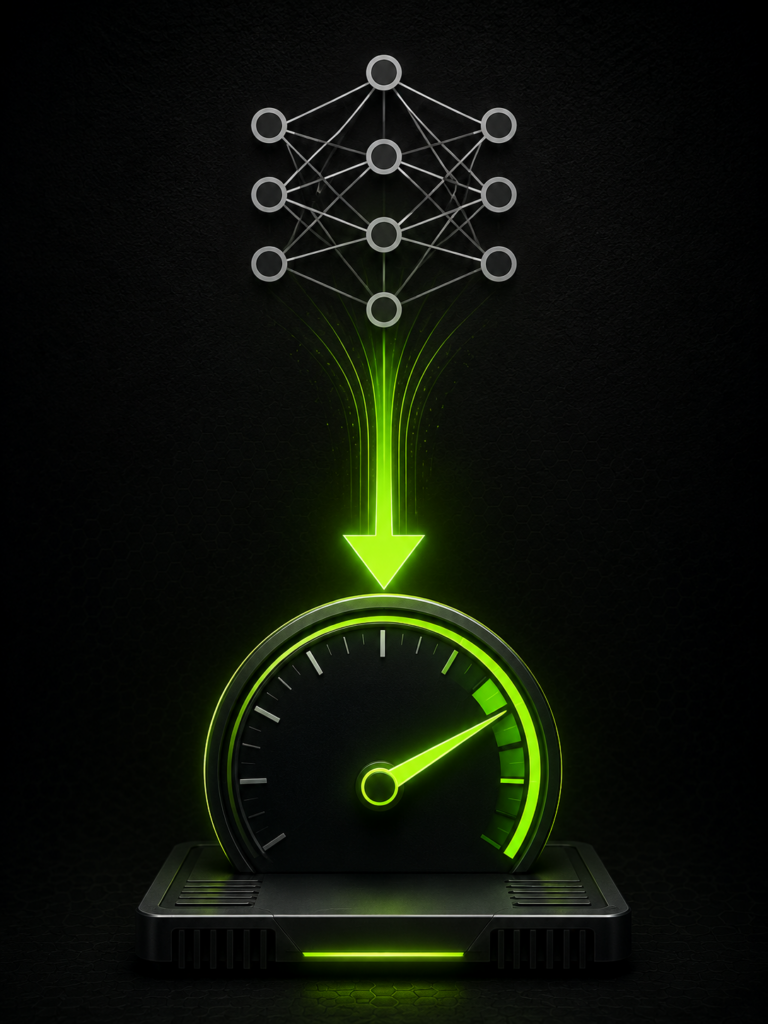
A model that runs fine on a GPU workstation is not the same model once it must run inside a Jetson module’s real power and thermal envelope. CTai LABS closes that gap with TensorRT™: INT8 and FP16 quantization, engine building, and power mode tuning, performed on the actual deployment hardware rather than a desktop proxy. This is standard practice across CTai LABS robotics and industrial engagements, where perception and navigation models are optimized against the specific Jetson module’s power mode and thermal envelope before validation, not after. The benefit shows up directly in the field: performance figures from a CTai LABS TensorRT engagement reflect what the system will actually do once it’s deployed, not what it did on a bench with better airflow and no power budget.
Omniverse and Isaac Sim
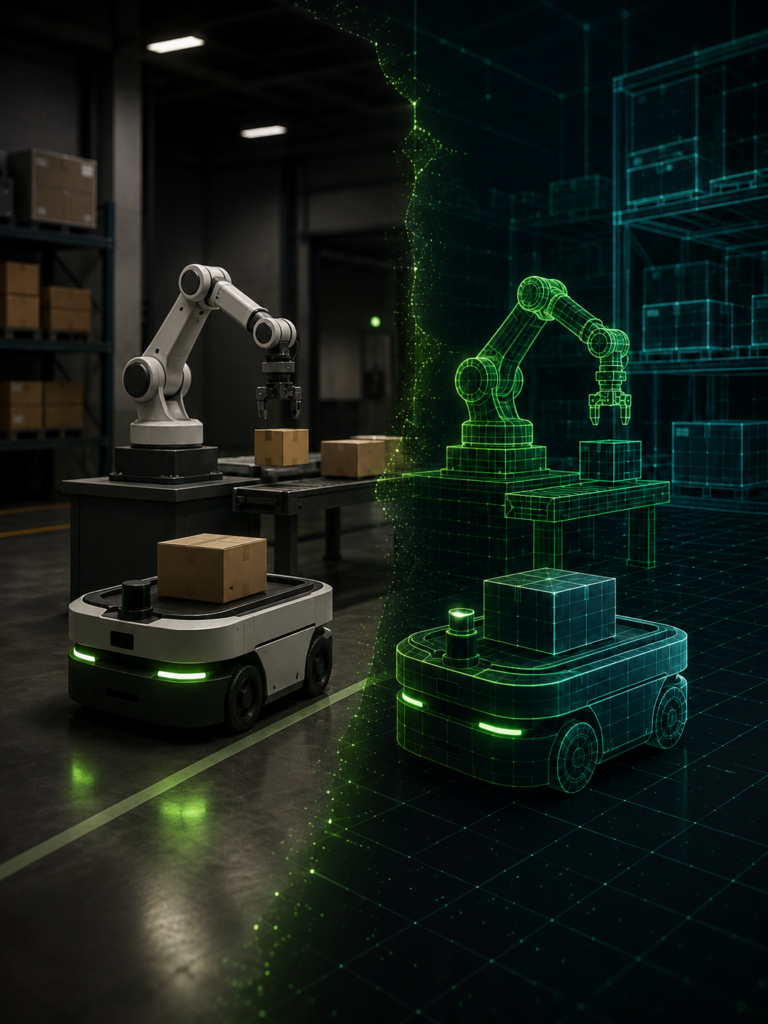
Field validation is expensive and, for some scenarios, unsafe to reproduce on real hardware. CTai LABS uses NVIDIA Omniverse and Isaac Sim to close that gap before a single unit is commissioned: Software-in-the-Loop testing, synthetic training data generation, and Digital Twin validation running millions of scenario variations in a physics-accurate simulation environment. This is a standard stage in the CTai LABS engagement process, not an optional add-on: perception models, navigation algorithms, and sensor fusion pipelines are validated in simulation, then in Hardware-in-the-Loop testing against the real sensor stack, before a system goes to the field. For programs with long fielding timelines or high-consequence failure modes, that sequence is what turns “it worked in the demo” into a system with actual validation records behind it.
Learn More
Resources and Frequently Asked Questions
Related
NVIDIA Elite Partner page. Connect Tech’s NVIDIA Elite Partner standing, certified credentials, and what that means for a CTai LABS engagement.
See NVIDIA Elite Partner →x86 to Jetson Migration. Moving from x86 architecture to Jetson Orin or Jetson Thor, including platform selection, ARM64 porting, BSP bring-up, and TensorRT optimization.
See x86 to Jetson Migration →Jetson Orin vs. Thor guide. Full comparison of Jetson AGX Orin and Jetson Thor across compute, power, memory bandwidth, and camera I/O.
Read: Jetson Orin vs. Thor →Sources
Connect Tech. (2025). Forge carrier board for NVIDIA Jetson AGX Orin (AGX201); Rogue-RX carrier board for NVIDIA Jetson AGX Orin Industrial (AGX203).
https://connecttech.comConnect Tech. (2026). Anvil-RX rugged system powered by NVIDIA Jetson AGX Orin (ESG635).
https://connecttech.com/product/anvil-rx-rugged-system-powered-by-nvidia-jetson-agx-orin/Connect Tech. (2026). Boson carrier board for NVIDIA Jetson Orin Nano (NGX020).
https://connecttech.com/product/boson-for-framos-carrier-board-for-nvidia-jetson-orin-nano/Connect Tech. (2026). Gauntlet carrier board for NVIDIA Jetson Thor; Rogue-T5 (AGX302) carrier board.
https://connecttech.comFrequently Asked Questions
Is CTai LABS an NVIDIA partner?
CTai LABS is a department of Connect Tech. Connect Tech is an NVIDIA Elite Partner, the highest tier in the NVIDIA Partner Network, with verified platform expertise across the full Jetson product line. Every CTai LABS engagement is backed by Connect Tech’s Elite Partner standing, certified tool access, and direct NVIDIA technical channel. It means CTai LABS, through Connect Tech, gets access and resources to new NVIDIA hardware and tools before general availability, along with direct technical support from NVIDIA when an engagement needs it.
What is the difference between Jetson Orin and Jetson Thor?
Jetson AGX Orin delivers up to 275 TOPS at 15 to 60 watts and is the right platform for most industrial vision, logistics AMR, and defense payload applications. Jetson Thor (T5000) delivers 2,070 FP4 TFLOPS at 40 to 130 watts on the Blackwell GPU architecture, providing 7.5 times the ai compute of Jetson AGX Orin (NVIDIA, 2025). Jetson Thor is the platform for humanoid robots, advanced AMRs, vision-language-action model deployment, and multi-sensor ISR. The Jetson Orin vs. Jetson Thor resource guide covers the full decision framework.
What Connect Tech hardware does CTai LABS use for NVIDIA Jetson projects?
Connect Tech designs and manufactures the solutions that Jetson modules run on. For Jetson Thor, the primary carriers are the Gauntlet and the Rogue-T5 (AGX302) (Connect Tech, 2026). For Jetson AGX Orin, the primary solutions are the Forge (AGX201), Rogue (AGX202), Rogue-RX (AGX203), and Anvil-RX (ESG635) (Connect Tech, 2025, 2026). For Jetson Orin NX and Jetson Orin Nano, the primary carriers are Hadron, Boson, and Lepton (Connect Tech, 2026).” Platform selection is made against the actual project constraints.
What is TensorRT and why does optimization matter for Edge deployment?
TensorRT is NVIDIA’s inference optimization library. It converts trained models into optimized inference engines through techniques including INT8 and FP16 quantization, layer fusion, and kernel auto-tuning. For Edge deployments, TensorRT optimization is how a model trained on a GPU workstation is made to run within the power and thermal envelope of a Jetson module in production. A model that has not been TensorRT-optimized for the target hardware will typically underperform the platform’s actual capability.
What is Isaac ROS and how does CTai LABS use it?
Isaac ROS is NVIDIA’s suite of GPU-accelerated ROS 2 packages for robotics applications, covering perception, navigation, sensor fusion, and hardware abstraction. CTai LABS configures and brings up Isaac ROS on Connect Tech hardware as a standard part of robotics integration engagements. The ROS-Ready Launchpad solution packages a validated Isaac ROS environment with a production BSP, available as a starting point for teams that want to skip the bring-up phase.
What is Isaac Sim and how does it relate to hardware deployment?
Isaac Sim is NVIDIA’s physics-accurate robotics simulator, built on Omniverse. CTai LABS uses it for Software-in-the-Loop testing, synthetic training data generation, and Digital Twin validation before a system is deployed on physical hardware. It allows validation of perception models, navigation algorithms, and sensor fusion pipelines against simulated scenarios that would be expensive or unsafe to reproduce in hardware testing.
Ready to Build Smarter?
Let’s create the intelligent Edge AI solution that moves your business forward.